The Best Security System for a Rural Home Is Not One Product. It Is a Layered Plan.
Living in the country gives you space, privacy, and distance from the problems of town.
But that same distance creates a different kind of risk.
If something happens on a rural property, help may not arrive quickly. Internet may be weak. Cell signal may be unreliable. Your driveway may be long. Your barn, shop, kennel, livestock area, fuel tank, equipment shed, and home may all need protection at the same time.
That is why the best security options for rural homes are not limited to cameras or alarm companies.
A rural home needs layers.
You need to know when someone enters the property.
You need to slow them down before they reach the house.
You need to protect outbuildings and equipment.
You need a plan for your family.
And in some situations, you may need a living layer of protection that can respond when cameras and alarms can only watch.
This guide will walk you through the strongest rural security options in plain language.
Why Rural Homes Need a Different Security Strategy
A suburban home and a rural home do not face the same security problem.
In a neighborhood, there may be nearby houses, streetlights, quick police access, and a shorter distance between the street and the front door.
A rural home often has the opposite:
- Long driveways.
- Poor lighting.
- Limited visibility from the road.
- Large blind spots.
- Outbuildings far from the house.
- Livestock or working animals.
- Expensive equipment.
- Weak Wi-Fi or cellular coverage.
- Fewer neighbors close enough to notice a problem.
- Longer law enforcement response times.
Security.org notes that rural properties often require more work than urban or apartment security, and recommends perimeter cameras, professional monitoring, and cellular-based alarm signaling as key features for rural homes. SafeHome’s rural security guide also identifies response time, connection options, and equipment durability as important rural security factors.
The problem is simple:
Most rural homes are not under-protected because the owner does not care.
They are under-protected because the property is harder to secure.
That is a different problem. It needs a different plan.
The Rural Security Priority Stack
Before buying equipment, think in layers.
A good rural security plan should do five things:
- Deter the wrong people from choosing your property.
- Detect people, vehicles, animals, or threats before they reach the house.
- Delay access to the home, outbuildings, animals, and equipment.
- Document what happened with useful video, alerts, or records.
- Defend your family if the threat becomes immediate.
Most people start with documentation.
They buy cameras.
That is useful, but it is not enough.
A camera may record a theft.
An alarm may notify you.
A motion light may expose movement.
But none of those things automatically stops a determined person from crossing the distance between your gate and your family.
For rural security, the better question is:
How early can I know something is wrong, and what can I do before the threat reaches the house?
Option 1: A Controlled Entrance and Gate System
For many rural homes, the driveway is the first real security point.
If your property has one main entrance, control it.
A gate does not need to make the property impossible to enter. Its job is to create friction, define boundaries, slow vehicles, and make casual trespass harder.
A strong rural entrance may include:
- A locking gate.
- Clear private property signage.
- Visible camera coverage.
- Driveway alarm or vehicle sensor.
- Solar lighting.
- Gravel or surface material that makes vehicles audible.
- A call box or keypad, if appropriate.
- A separate delivery location outside the main home area.
The mistake is treating the front door as the first line of defense.
On rural property, the first line of defense should often be the entrance, driveway, or approach path.
If you can detect a vehicle at the gate, you have time.
If you only know something is wrong when someone is on the porch, you are reacting late.
Option 2: Driveway Alarms and Long-Range Sensors
A driveway alarm is one of the most practical security tools for rural homes.
It can tell you when a vehicle or person enters a specific area. That matters when the house is set back from the road or when you cannot see the entrance from inside.
For rural use, look at:
- Driveway vehicle sensors.
- Break-beam sensors.
- Long-range motion sensors.
- Magnetic gate sensors.
- RF-based alert systems.
- Solar-powered sensor stations.
- Systems that work without depending entirely on Wi-Fi.
In the Reddit rural property thread, the original poster described a common rural problem: a five-acre property, outbuildings hundreds of feet from the entrance, weak internet, no power at the perimeter, and the need for solar or long-range solutions. The responses focused on practical options such as trail cameras, long-range wireless sensors, RF alert systems, PoE cameras, local recording, and long-distance infrastructure.
That is the reality of rural security.
The best system is not always the one with the nicest app.
It is the one that still works when your Wi-Fi drops, your power is limited, and the sensor is hundreds of feet from the house.
Option 3: Cameras That Match the Property, Not Just the House
Cameras are important.
But rural cameras need to be chosen differently than city cameras.
A typical doorbell camera may help at the front door, but it may not solve the real rural security problem. Rural homes often need coverage over larger distances and multiple zones.
Consider camera coverage for:
- Driveway entrance.
- Main approach to the house.
- Front and back doors.
- Garage.
- Barn.
- Workshop.
- Kennel.
- Livestock area.
- Equipment parking.
- Fuel storage.
- Mailbox or package drop.
- Long blind-side approaches.
Security.org specifically recommends indoor and outdoor cameras, motion detectors, entry sensors, and professional monitoring for rural homes, and notes that barns, garages, livestock areas, and heavy equipment zones should be watched.
For many rural homes, the better camera setup may include:
- PoE cameras where wiring is possible.
- Solar cameras where power is unavailable.
- Cellular trail cameras for distant points.
- Local NVR recording so footage is not fully dependent on internet.
- AI person or vehicle detection to reduce false alerts.
- Infrared or low-light capability.
- Weather-rated housings.
- Backup power.
Do not buy cameras only for image quality.
Buy for the environment.
A rural camera must survive heat, cold, rain, dust, insects, distance, power limitations, and unreliable connectivity.
Option 4: Professional Monitoring With Backup Communication
A monitored alarm can be valuable for rural homes, especially when the homeowner travels or sleeps far from certain parts of the property.
But the system must be matched to the communication reality of the location.
Important questions:
- Does the alarm rely only on Wi-Fi?
- Is cellular signal strong enough?
- Is there landline support if cellular is weak?
- Does the system have battery backup?
- Does it cover outbuildings?
- Can it alert multiple family members?
- Does it still record locally if the internet goes down?
- Does the monitoring company have reliable response procedures?
SafeHome notes that rural properties may need backup communication options when Wi-Fi drops, and that cellular may be promising while landlines may be more reliable in some rural areas. Security.org also notes that some systems use internet with cellular backup, while others are more cellular-based, and that rural users should check signal coverage before relying on cellular backup.
The key point:
A rural security system cannot depend on one fragile connection.
If the system cannot communicate, it cannot notify.
Option 5: Motion-Activated Lighting
Light is cheap pressure.
Criminals prefer concealment. Motion lighting removes some of that concealment and tells the family that something changed outside.
Use motion lighting around:
- Gates.
- Driveways.
- Parking areas.
- Walkways.
- Porches.
- Back doors.
- Barn doors.
- Shop doors.
- Kennels.
- Fuel tanks.
- Equipment areas.
- Dark corners near the house.
For rural homes, solar lighting may be useful where power is not available. Hardwired lighting is stronger where practical.
Lighting should not blind your cameras. It should support them.
The goal is not to make the property look like a prison.
The goal is to make movement visible.
Option 6: Reinforced Doors, Locks, and Outbuildings
Rural homeowners often secure the main house but forget the structures that attract thieves.
Outbuildings may contain:
- Tools.
- Generators.
- ATVs.
- Tractors.
- Trailers.
- Feed.
- Fuel.
- Firearms.
- Tack.
- Copper.
- Equipment.
- Dog gear.
- Livestock supplies.
The house may be the emotional target.
The outbuildings may be the financial target.
Basic hardening includes:
- Quality deadbolts.
- Reinforced strike plates.
- Longer screws into structural framing.
- Door bars where appropriate.
- Locking hasps and shielded padlocks.
- Window coverings.
- Security film.
- Lockable interior storage.
- Cameras covering the approach.
- Sensors on barn, shop, and garage doors.
- Inventory records and serial numbers.
This is not complicated.
Most rural security failures come from obvious weak points that were never corrected.
Option 7: A Safe Room and Family Emergency Plan
A rural security plan is not complete unless your family knows what to do.
Equipment cannot make decisions for your family under stress.
Your plan should answer:
- What happens if someone comes up the driveway at night?
- Who checks the camera or alarm?
- Who gets the children?
- Where does the family gather?
- Who calls 911?
- What is the property address, gate code, and best access route for responders?
- What if the threat is between the parents and the children?
- What if the family must leave the house?
- What if the threat is at the barn, not the home?
- What if the internet is down?
- What if the phone has no signal?
For rural properties, emergency communication matters more than people think.
Make sure family members know:
- The physical address.
- Cross streets or landmarks.
- Gate instructions.
- Whether the driveway is passable.
- Where emergency vehicles should enter.
- Where livestock, dogs, or locked gates may slow responders.
A family plan should be simple enough to follow under stress.
Do not build a plan that requires ten steps, perfect memory, or calm conditions.
Option 8: Firearms and Defensive Tools
Many rural homeowners own firearms.
That is common.
But firearms do not replace a security plan.
A firearm does not alert you at the gate.
It does not identify a vehicle at the barn.
It does not call 911.
It does not gather your children.
It does not distinguish between a trespasser, a confused neighbor, a delivery driver, or a true threat.
It does not remove legal consequences.
If firearms are part of your home security plan, you need training, safe storage, clear rules, legal understanding, and a family plan that accounts for children, guests, darkness, stress, target identification, and law enforcement response.
The point is not whether firearms are good or bad.
The point is that tools are not plans.
A serious rural security system must be bigger than any single tool.
Option 9: Dogs for Rural Property Security
Dogs have always had a place in rural life.
They hear things people miss.
They notice movement before you do.
They make a property feel occupied.
They discourage casual trespassers.
They can alert the family before a person reaches the house.
But not all dogs serve the same purpose.
There is a difference between:
- A pet dog that barks.
- A livestock guardian dog.
- A watchdog.
- A police-style patrol dog.
- A sport-trained bite dog.
- A true Family Protection Dog.
Each has a different mission.
A livestock guardian dog may protect animals from predators.
A pet may alert, but may not engage.
A sport dog may perform impressive bite work, but may not be trained for a real family-protection environment.
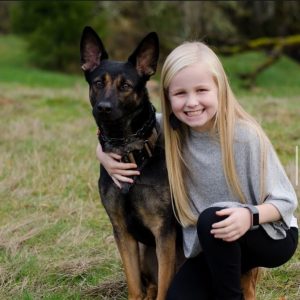
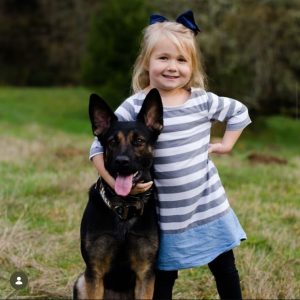
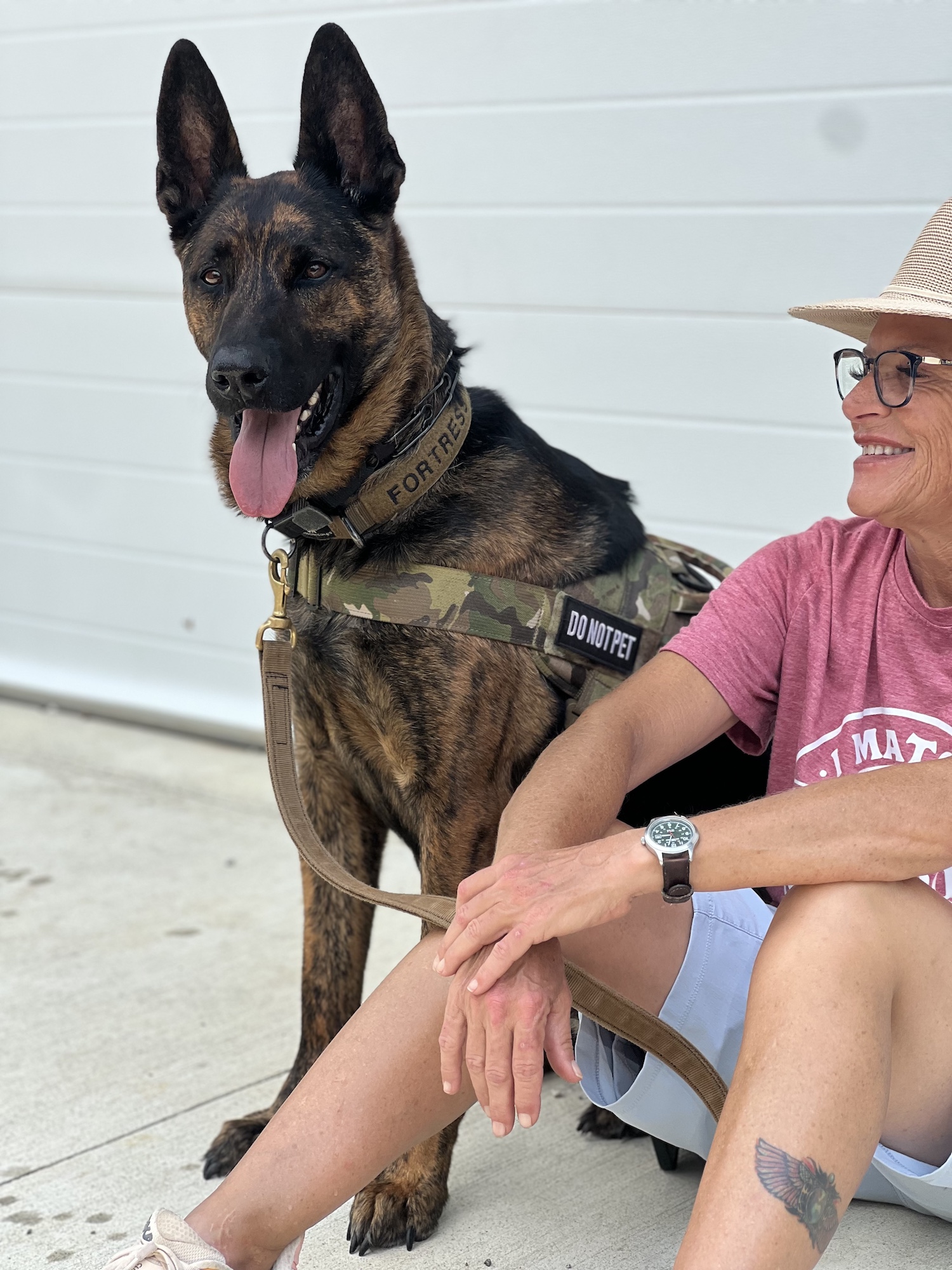
A Family Protection Dog must live safely with the family and still respond when a real human threat appears.
That distinction matters.
The Fortress K9 standard is not simply “a dog that bites.”
A true Family Protection Dog must be safe, stable, obedient, controllable, and capable under real pressure. Fortress K9’s own buyer education material explains the gap between standard security tools, pets, sport-trained dogs, and true family protection dogs: cameras record, alarms alert, pets are usually not trained to stop a threat, and not every biting dog is a protection dog.
That is especially important on rural property because the dog may encounter:
- Children.
- Guests.
- Delivery drivers.
- Farm help.
- Contractors.
- Livestock.
- Other dogs.
- Wildlife.
- Open land.
- Vehicles.
- Outbuildings.
- Low-light environments.
A rural protection dog cannot be unstable.
If a dog is not safe around your children, it is not a protection dog.
Option 10: A Family Protection Dog for Rural Homes
A trained Family Protection Dog may make sense for a rural home when the family wants more than cameras, alarms, and locks.
This is not because technology is useless.
Technology matters.
But technology is mostly passive.
Cameras see.
Alarms notify.
Lights expose.
Locks delay.
A trained dog can deter, alert, move with the family, and respond when a threat becomes real.
Fortress K9 describes the ideal dog as one with “The Switch”: calm and stable in normal life, but capable of controlled aggression when a true threat requires it. The Free Gift source frames Fortress K9 dogs as safe and stable with the family, but capable of real violence if someone threatens them, with the goal of a dog that can live peacefully in the home, travel, obey under pressure, and switch on when a real threat appears.
For rural homes, that can matter because distance changes everything.
If someone is already on your property, the situation may develop before help arrives.
A trained protection dog is not a replacement for police, firearms, cameras, alarms, or a family plan.
It is a living layer inside that plan.
What Makes a Rural Protection Dog Different From a Regular Dog?
A rural protection dog must be more than loud.
Barking is not protection.
A dog that barks at everything can become background noise.
A dog that cannot be controlled can create liability.
A dog that is aggressive toward safe people can make your home more dangerous, not less.
A dog that performs on a training field may still fail in a real rural threat scenario.
A serious Family Protection Dog should have:
- Stable temperament.
- Strong obedience.
- Clear handler relationship.
- Safety around children.
- Safety around guests under control.
- Environmental confidence.
- Ability to settle in the home.
- Ability to work around vehicles, buildings, and property movement.
- Controlled aggression when required.
- Reliable off-switch.
- Training that prepares the dog for real-world pressure.
The available Beyond the Bite material says Fortress K9 dogs are bred and trained for real-world protection while also having an “off switch,” with priority placed on temperament, capability, health, stress resilience, problem-solving, and stability over cosmetic traits. It also says the dogs are trained for both intense work and the ability to remain calm and still in everyday life.
That is the standard a rural family should be looking for.
Not a dog that only looks intimidating.
A dog that can live correctly.
And respond correctly.
Sport Bite Work Is Not the Same as Rural Family Protection
A rural threat does not happen on a sport field.
There are no lines, points, judges, sleeves, or predictable routines.
A rural confrontation may happen:
- At a gate.
- Near a barn.
- Around a vehicle.
- In the dark.
- In the rain.
- On uneven ground.
- Around children.
- Around livestock.
- With multiple people.
- With weapons.
- With a person who does not behave like a training helper.
That is why sport-based bite work should not be confused with real-world family protection.
The Beyond the Bite source makes this distinction directly: Fortress K9’s methodology is different from patrol dog work and bite sports because it is built around real-world protection scenarios, not merely “bite and hold” routines. It also says Fortress K9 dogs are trained for controlled recall, engagement only with aggressive actions, multiple-attacker preparedness, and environmental awareness.
This is one reason rural homeowners should be careful when shopping for a protection dog.
A dog that looks good in a video may not be the right dog to live with your family on rural property.
The mission determines the training.
The Best Rural Security Options Ranked by Function
Here is the practical ranking.
1. Best First Step: Control the Property Entrance
Start with the gate, driveway, and main approach.
If you can identify a vehicle or person before they reach the house, you have more time and more options.
2. Best Early Warning: Driveway Sensors and Long-Range Alerts
This is one of the highest-value tools for many rural homes.
Use it to know when movement happens where it should not.
3. Best Documentation: Cameras With Local Recording
Cameras matter, but rural homes should not depend entirely on cloud recording or weak Wi-Fi.
Use local storage where possible.
4. Best Passive Deterrent: Lighting and Visible Security
Motion lights, signs, cameras, gates, and obvious security measures can make the property look harder to target.
5. Best Structural Protection: Reinforced Doors and Outbuildings
Slow entry into the house, barn, garage, and shop.
Most criminals want easy access.
6. Best Communication Layer: Monitored Alarm With Backup Signal
A monitored alarm can help, but only if it can communicate reliably from your location.
7. Best Family Layer: A Written and Practiced Plan
Your family needs to know what to do before stress takes over.
8. Best Active Living Layer: A Properly Trained Family Protection Dog
For the right family, a trained protection dog adds something cameras, lights, and alarms cannot: a living, thinking presence inside the home and around the family.
What About Livestock Guardian Dogs?
Livestock guardian dogs can be excellent for the right job.
But their job is not the same as a Family Protection Dog.
A livestock guardian dog is generally selected and managed to protect animals from predators and intruders near livestock.
A Family Protection Dog is trained to live directly with the family and respond to human threats under control.
Some rural properties may need both.
Do not assume one replaces the other.
The question is not, “Should I get a dog?”
The question is, “What mission does this dog need to perform?”
If the mission is protecting goats from coyotes, that points one direction.
If the mission is protecting your wife and children in the home, that points another direction.
If the mission is both, you need a serious plan before choosing a dog.
A Simple Rural Home Security Checklist
Use this to evaluate your property.
Entrance and Driveway
- Is the main entrance controlled?
- Is there a gate?
- Can you detect vehicles before they reach the house?
- Is there lighting at the entrance?
- Is the driveway visible from the house or cameras?
- Is the address clearly marked for emergency responders?
House
- Are exterior doors reinforced?
- Are locks upgraded?
- Are windows secured?
- Are cameras covering all likely approaches?
- Is there a safe room or safer gathering area?
- Does every family member know where to go?
Outbuildings
- Are barns, shops, kennels, garages, and sheds locked?
- Are they covered by cameras or sensors?
- Are tools, fuel, firearms, and equipment secured?
- Are serial numbers and photos documented?
- Are trailers locked or disabled?
Power and Communication
- Does the alarm have battery backup?
- Does the camera system have local recording?
- Does the system still function if internet drops?
- Is cellular signal strong enough?
- Is satellite internet or wired infrastructure worth adding?
- Are critical devices protected by backup power?
Family Plan
- Does your family know what to do at night?
- Who gets the children?
- Who calls 911?
- What if someone is at the barn?
- What if the family must leave?
- What if your phone has no signal?
- What if the threat is already at the house?
Dog Layer
- Is your dog safe around your family?
- Is your dog obedient under pressure?
- Is your dog trained for the mission you expect?
- Is the dog a deterrent, watchdog, livestock guardian, or true protection dog?
- Can the dog turn off and return to calm?
- Does your family know how to manage the dog?
The Mistake Rural Homeowners Make
The mistake is buying random tools without building a system.
A camera here.
A trail cam there.
A cheap alarm.
A bright light.
A barking dog.
A firearm in the bedroom.
Each tool may help.
But if they do not work together, the family still has gaps.
A better plan looks like this:
- Gate and driveway control.
- Long-range alerts.
- Camera coverage.
- Lighting.
- Reinforced home and outbuildings.
- Monitoring and backup communication.
- Family emergency plan.
- Protection dog, if appropriate.
- Regular review and practice.
This is not paranoia.
This is property management.
A rural home gives you distance and privacy.
Your security plan must account for both.
When a Family Protection Dog May Be the Right Decision
A trained Family Protection Dog may be the right decision if:
- You live on rural or isolated property.
- You are concerned about longer response times.
- You want more than cameras and alarms.
- You have family members home alone.
- You travel and want your spouse or family to have active protection.
- You want a dog that can live safely in the home.
- You understand the responsibility of owning a serious protection dog.
- You want a visible deterrent and a real response capability.
A protection dog is not right for everyone.
It requires the right family, the right dog, the right training, and proper Family Integration Training.
But for the right rural household, it can fill a gap that passive security cannot.
A camera can show you what happened.
A Fortress K9 Family Protection Dog is trained to help make sure the wrong person does not get that far.
The Bottom Line
The best security options for rural homes are layered.
Do not rely on one tool.
Use gates, lights, sensors, cameras, reinforced doors, monitored alarms, family plans, and — where appropriate — a properly trained Family Protection Dog.
Your goal is not to turn your rural home into a prison.
Your goal is to create enough warning, control, delay, and response capability that your family can live with more confidence.
Space is one of the benefits of rural life.
But space also means responsibility.
Build the system before you need it.
Need Help Deciding What Level of Protection Fits Your Rural Property?
If you live on rural property and you are concerned that cameras, alarms, and locks may not be enough, Fortress K9 can help you think through the next step.
Fortress K9 trains Family Protection Dog s that are safe and stable in the home, but capable when a real threat appears.
If you are ready to purchase a trained protection dog, then scheduling a consultation is the right decision.
If you want stronger family security before buying a protection dog, then the Family Protection Plan is the right decision.
If you want to understand real protection dogs before moving forward, then Beyond the Bite is the right decision.
FAQ
What is the best security system for a rural home?
The best rural home security system is a layered system. At minimum, rural homes should consider driveway alerts, exterior cameras, motion lighting, reinforced doors, monitored alarms with backup communication, and a family emergency plan. Larger properties may also need outbuilding sensors, local video recording, and a trained protection dog.
Do rural homes need professional monitoring?
Professional monitoring can be valuable for rural homes, especially when the property is isolated or the family travels. The main issue is whether the system can communicate reliably through cellular, landline, satellite, or internet backup.
Are cameras enough for rural property security?
No. Cameras are useful for alerts and documentation, but cameras alone do not stop a threat. Rural homes should combine cameras with gates, sensors, lighting, locks, alarms, family procedures, and other active security layers.
Are trail cameras good for rural security?
Trail cameras can help monitor remote areas where power or Wi-Fi is not available. They are useful for documentation and some alerts, but they may not provide the same real-time awareness, local recording, or person-detection capability as a properly designed security camera system.
What should I secure first on a rural property?
Start with the main entrance, driveway, home doors, outbuildings, and the areas where valuable equipment is stored. The goal is to detect people early, slow access, and protect the places most likely to be targeted.
Is a protection dog a good option for a rural home?
A properly trained Family Protection Dog can be an excellent layer for some rural homes, especially where distance, isolation, and response time are concerns. The dog must be safe around the family, stable in the home, obedient under pressure, and trained for real-world protection.
What is the difference between a guard dog and a Family Protection Dog?
A guard dog may deter or alert, but a Family Protection Dog must be able to live safely with the family and respond under control when a real threat occurs. Stability, obedience, judgment, and handler control are critical.
Should I get a livestock guardian dog or a protection dog?
It depends on the mission. A livestock guardian dog is generally used to protect animals from predators. A Family Protection Dog is trained to protect people and live closely with the family. Some rural properties may need both, but they are not the same tool.